Digging for Gold: How Crate Hunters Built the Backbone of Hip-Hop
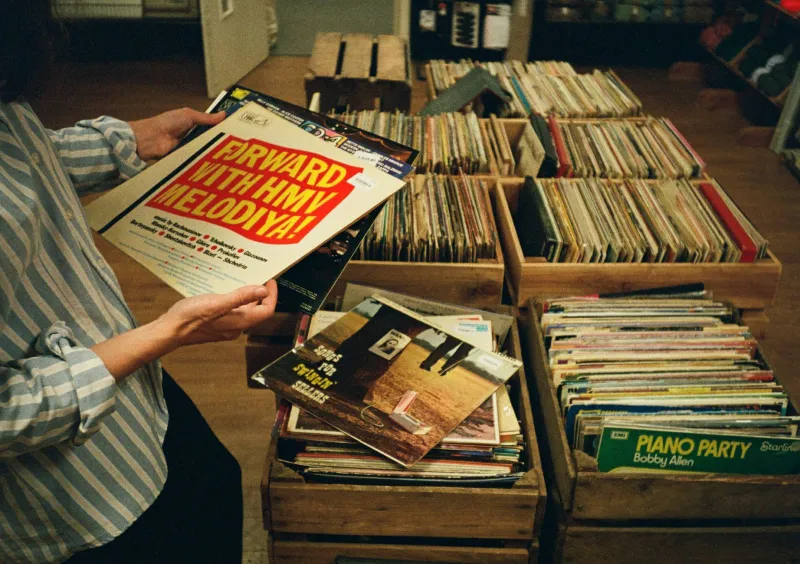
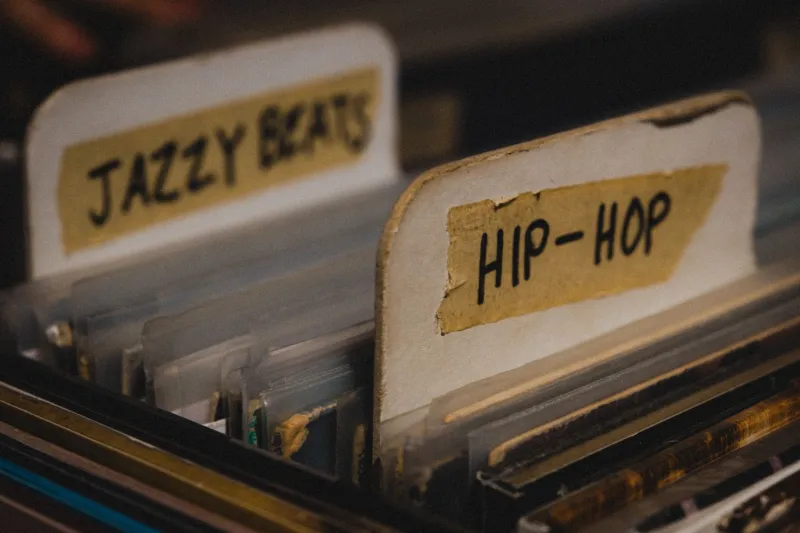
There's a moment every serious beat maker knows. You're flipping through a stack of vinyl at some hole-in-the-wall shop in a city you're visiting for one night. Your fingers are black from the dust. You've been at it for two hours and found nothing. Then — there it is. A record with no photo on the sleeve, a label you've never heard of, a pressing from 1974 that probably sold three hundred copies in a regional market nobody remembers. You drop the needle. Four bars in, your whole body locks up. That's the one.
That feeling? That's the heartbeat of hip-hop production. And it's been driving the culture since before most of us were born.
The Loop That Started Everything
Let's not dance around it — hip-hop was built on other people's music. Not stolen, not copied, transformed. The Amen break, that six-second drum fill from The Winstons' 1969 B-side "Amen, Brother," became the most sampled piece of audio in history. It showed up in jungle, drum and bass, and more hip-hop records than anyone's ever properly counted. One forgotten funk record, pressed in obscurity, ended up shaping an entire sonic universe.
That's not an accident. That's alchemy.
Producers like DJ Premier, Pete Rock, J Dilla, and Madlib didn't just find samples — they heard things in those records that the original artists may not have even intended. A two-second guitar lick buried in the third verse of an album cut nobody played on the radio became the spine of a track that went platinum. The art isn't just in the finding. It's in the listening.
What Digging Actually Looks Like
Forget the romanticized version for a second. Real crate digging is work. It's waking up early to hit a Goodwill in the suburbs before the resellers get there. It's spending forty dollars on a record you're not even sure about because something in your gut says it might have something. It's building relationships with shop owners in Cincinnati, in New Orleans, in small Georgia towns where church organs and southern soul records sit untouched for decades.
Producers who've been in the game long enough will tell you the best finds almost never come from the obvious spots. The legendary stuff — the rare Brazilian funk pressings, the obscure Detroit soul records, the forgotten library music from European film scores — that lives in the places most people overlook.
Beat makers who've come up in the tradition talk about it like it's a spiritual practice. You're not just shopping. You're listening to history. Every record in that bin was somebody's creative output, somebody's livelihood, somebody's moment. When you sample it and flip it into something new, you're carrying that forward. There's a responsibility in that.
The Legal Minefield Nobody Warned You About
Here's where the culture runs headfirst into the industry, and it's ugly. Sampling without clearance will end your career before it starts — or worse, it'll end it after you've built something real.
The 1991 Grand Upright Music v. Warner Bros. Records case, where Biz Markie lost over an uncleared Gilbert O'Sullivan sample, changed everything. Suddenly, labels got scared. Clearance costs skyrocketed. What had been a free-flowing creative exchange between generations of Black music became a legal transaction with price tags that could run anywhere from a few thousand to hundreds of thousands of dollars depending on who owns the master and the publishing.
Small independent producers — the ones doing the most creative work, the ones digging the deepest — often can't afford it. So they either go without clearance and hope nobody notices (risky), chop and flip the sample so heavily it becomes legally unrecognizable (creative), or skip sampling altogether and recreate the sound live (time-consuming but clean). None of those options are perfect. All of them have shaped the way hip-hop sounds.
The tension between artistic freedom and copyright law is real, and it disproportionately affects independent artists who don't have major label legal teams backing them up. That's a conversation the industry still hasn't figured out how to have honestly.
The Flip Is the Art
Let's give credit where it's due though — the best producers don't just lift a loop and call it a day. The flip is everything. Taking a sample and making it yours means pitching it up or down, chopping it into pieces and rearranging the rhythm, layering drums underneath it that change the entire emotional weight of the thing, adding bass lines that make it feel like a completely new composition.
J Dilla was the undisputed master of this. His ability to take something familiar and make it feel like you'd never heard it before — slightly off-kilter, warm, deeply human — is why producers still study his catalog like a textbook. Madlib went even further into the abstract, pulling from obscure world music and jazz records to build soundscapes that felt like nothing else in hip-hop. Kanye West took soul samples and turned them into arena-sized anthems. Each of them found something different in the crates and brought something different out.
The sample isn't the song. The sample is the seed. What grows from it depends entirely on the vision of the person holding the shovel.
Why It Still Matters Right Now
In an era where producers can build entire beats from software plugins and AI-generated sounds, sampling feels more countercultural than ever. There's something deeply intentional about choosing to go back to the physical, to hold a piece of vinyl, to listen to music that was made before you were born and find something in it worth carrying forward.
A new generation of beat makers — producers coming up on SoundCloud and Bandcamp, kids who learned to flip samples on cheap drum machines before they ever touched professional software — are keeping that tradition alive. They're sampling each other, sampling their parents' record collections, sampling sounds that are already samples of something else. The lineage keeps moving forward.
And somewhere right now, in a record shop in Chicago or Atlanta or Philadelphia or some town you've never heard of, a producer is flipping through a crate. Their fingers are getting dusty. They've been at it for hours. They're about to find the record that changes everything.
That's where hip-hop lives. Always has been.