Stolen Goods, New Tricks: How Today's Producers Are Flipping Samples With AI and Changing Hip-Hop Forever
Let's get one thing straight from jump: hip-hop was built on theft. Beautiful, intentional, transformative theft. From DJ Kool Herc isolating the break in "Amen, Brother" to Pete Rock flipping an obscure jazz record into something that made grown men cry, the sample flip has always been hip-hop's most honest art form. You take something that existed, you hear what nobody else heard in it, and you make it yours.
But in 2024, the game is shifting in ways that would've broken Dilla's brain — and maybe, just maybe, inspired him too.
The Crate Goes Digital
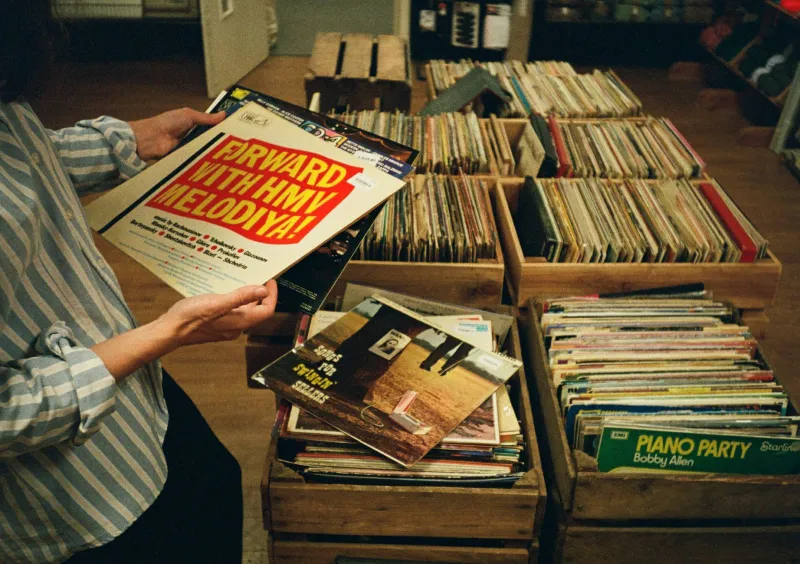
For decades, the crate dig was a physical act. Producers haunted thrift stores in cities nobody flew into, flipped through dusty Peruvian funk records, and guarded their sources like state secrets. That secrecy was part of the culture. Your sample was your fingerprint.
Then the internet democratized the dig. Discogs, YouTube rabbit holes, and music blogs blew the vault wide open. Suddenly, everyone had access to the same obscure Ghanaian highlife records and forgotten Motown B-sides. The playing field leveled — and the competition got ruthless.
Now, AI tools are doing something even more disruptive. Platforms powered by machine learning can now analyze waveforms, identify melodic structures, and surface sample candidates that no human crate digger would ever stumble across naturally. We're talking about a 1973 library music record pressed in Belgium with a three-second drum fill that just happens to sit perfectly at 92 BPM. Stuff that was effectively invisible is now findable in minutes.
"It's like having a research assistant who's listened to every record ever made," says one Brooklyn-based producer who asked to stay anonymous because, well, he's still protective of his sources even if the tools are changing. "I'm not mad at it. I'm using it. But it changes what 'finding' something even means."
The Flip Itself Is Getting Weirder — In the Best Way
Discovery is only half the equation. What producers are doing with samples once they find them is where things get genuinely wild.
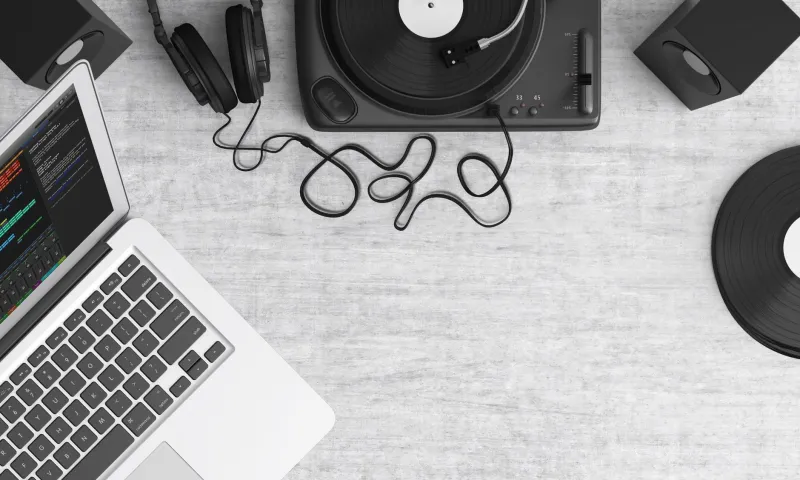
AI-assisted tools like stem separators — software that can isolate individual instruments from a mixed recording — have fundamentally changed the anatomy of a flip. Where producers once had to chop around the bass or work with a muddy vinyl recording, they can now surgically extract just the strings, just the vocal hum, just the hi-hat pattern. The result is a level of sonic precision that older-school producers had to fake with EQ and compression.
LA-based producer Mez, who's worked with several west coast rappers on independent releases, describes the shift plainly: "Before, you were working with the whole painting. Now you can take just the brushstroke you wanted. It's a different relationship with the source material."
That relationship is producing some genuinely new sounds. Producers are layering isolated stems from completely unrelated records, creating harmonic combinations that would've been technically impossible to pull off cleanly even ten years ago. A gospel choir from 1968 sitting under a drum machine pattern from a 1980s video game soundtrack, with a single piano note plucked from a 1990s R&B deep cut — and somehow it all breathes together.
The Authenticity Question Nobody Wants to Answer
Here's where it gets complicated, and here's where the hip-hop community is genuinely divided.
There's a contingent of producers — many of them veterans — who feel like the difficulty of the old process was the point. The hours spent in a basement with headphones on, training your ear to recognize something special in a pile of garbage, that was the craft. The struggle was the education. If AI shortens that journey, does the destination still mean the same thing?
"I learned how to hear music by digging," says one producer from Chicago who's been making beats since the mid-2000s. "You can't skip that. You can use the tools, but if you don't have the ear, you're just running algorithms."
It's a fair point. And it connects to a broader anxiety in the culture about what happens when technology removes friction from creative processes that were defined by their friction.
But there's a counter-argument that's equally hard to dismiss. Hip-hop has never been precious about its tools. When the MPC showed up, it changed everything. When Pro Tools replaced tape, people adapted. The culture has always been about using whatever's available to make something that hits. Gatekeeping the methodology feels like it misses the whole spirit of the form.
"Every generation thinks the new tools are going to kill the art," says Mez. "They never do. They just change who gets to participate."
Ownership in the Age of the Algorithm
Then there's the legal dimension, which is its own entire conversation.
Sampling has always existed in a legal gray zone that hip-hop navigated through a combination of clearances, interpolations, and sometimes just hoping nobody noticed. The Beastie Boys got sued. Puffy got sued. De La Soul spent years in a dispute over samples that helped define a generation. The system was never built for hip-hop, and hip-hop never fully trusted it.
AI complicates this further. When a machine surfaces a sample, processes it through stem separation, and a producer reassembles the pieces, the chain of creative ownership gets genuinely murky. Who made what? What counts as a derivative work? These aren't hypothetical questions — they're already showing up in copyright disputes.
Some producers are responding by leaning harder into original composition, using AI tools to generate new sounds that are inspired by vintage aesthetics without technically sampling anything. Others are doubling down on clearances, treating the legal paper trail as part of the art's legitimacy. Neither approach is wrong. Both are real responses to a system that hasn't caught up with the culture.
The Tradition Isn't Going Anywhere
For all the noise around AI and modern production tools, the fundamental truth of the sample flip hasn't changed. You still have to hear something in a piece of music that nobody else heard. You still have to have the vision to transform it. You still have to make it feel like yours.
The tools are different. The process is faster. The access is wider. But a bad flip is still a bad flip, and a great one still stops you cold.
Hip-hop has always been about taking what you weren't supposed to have and making it into something undeniable. Whether you're finding it in a dusty crate or through a machine learning algorithm, the game is still the same: hear deeper, flip harder, and make something that lasts.
The sample flip revolution isn't a betrayal of the tradition. It's the tradition doing what it's always done — evolving, adapting, and refusing to stay still.