Dirty Tape Energy: Why Hip-Hop's Roughest Recordings Are Winning the Streaming Era
Pull up a playlist of hip-hop's biggest streaming hits right now and you'll notice something. The sonics are enormous. The bass is engineered to rattle earbuds at exactly the right frequency. The vocal chains are pristine. Every element sits in its own perfect pocket in the mix, placed there by engineers who charge more per hour than most people make in a week.
Now open a different tab. Find Clavish, or Benny the Butcher's early mixtapes, or anything from that corner of SoundCloud where the comments section reads like a war room. Notice how those records sound — slightly compressed, the 808s a little rougher, the samples sitting high in the mix like they weren't cleared because they weren't. Notice how hard they hit anyway. Notice how real they feel.
That gap — between the polished and the raw — is one of the most interesting fault lines in hip-hop right now.
The Overproduction Problem Nobody Wants to Talk About
At some point in the last decade, hip-hop production crossed a threshold. The tools got better, the budgets got bigger, and the major-label arms race for sonic perfection quietly started producing music that felt... sterile. Not bad, exactly. Just frictionless. Smooth in a way that left nothing to grab onto.
Listeners noticed, even if they couldn't articulate why. Engagement metrics started telling a story that A&R departments didn't love: highly polished, expensive-sounding releases were underperforming compared to rougher, more immediate material. Not universally. Not always. But enough to raise eyebrows.
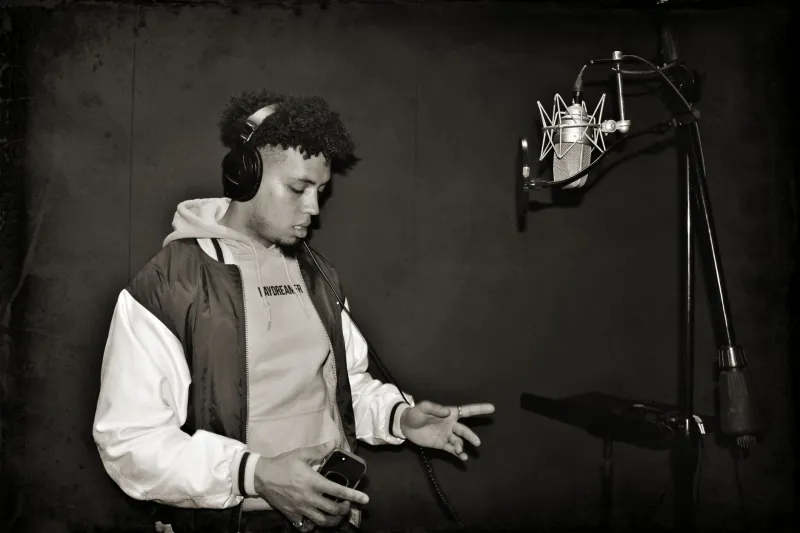
The irony is brutal. Labels spend hundreds of thousands of dollars chasing a sound that millions of people are actively fatigued by, while a kid recording into a Blue Yeti in his apartment in Cleveland is racking up plays because his music sounds like it came from somewhere real.
Lo-Fi as a Statement, Not a Limitation
Here's what's important to understand: the lo-fi aesthetic in contemporary hip-hop isn't accidental. It's not artists making the best of limited resources. In many cases, it's a deliberate creative and cultural stance.
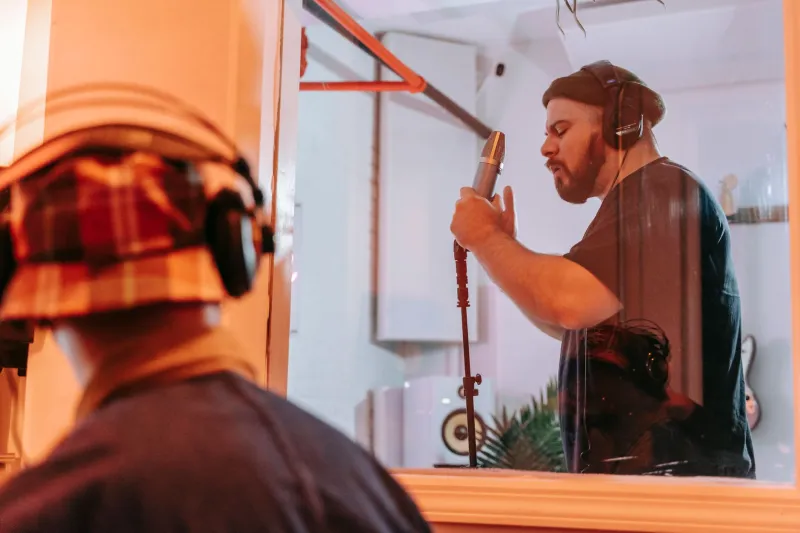
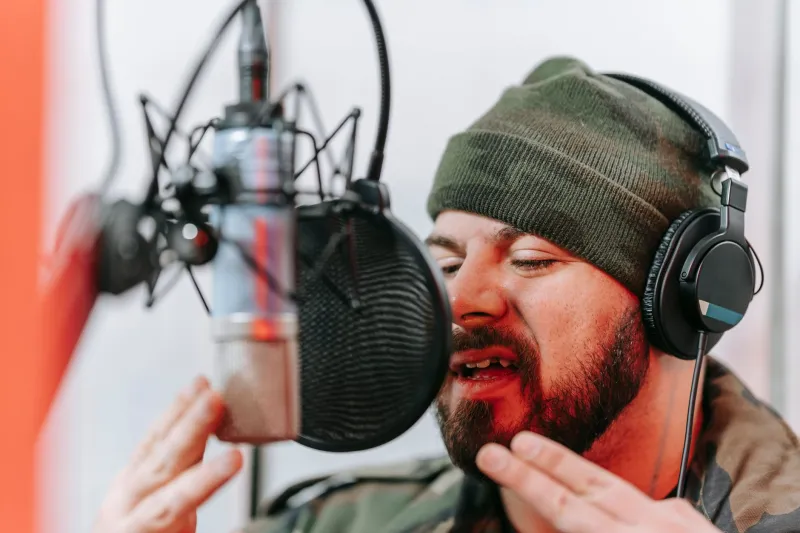
When a producer like Conductor Williams or Alchemist leaves tape hiss in a mix, or when a rapper chooses to track vocals in an untreated room specifically because of what that room sounds like, they're communicating something. They're saying: this music is too urgent to wait for perfect conditions. They're aligning themselves with a lineage that runs from boom-bap through early trap, through every great hip-hop era that prioritized feel over fidelity.
The lo-fi choice signals authenticity in a landscape drowning in artifice. And in hip-hop, authenticity is the only currency that never devalues.
Bedroom Producers Are Running the Numbers
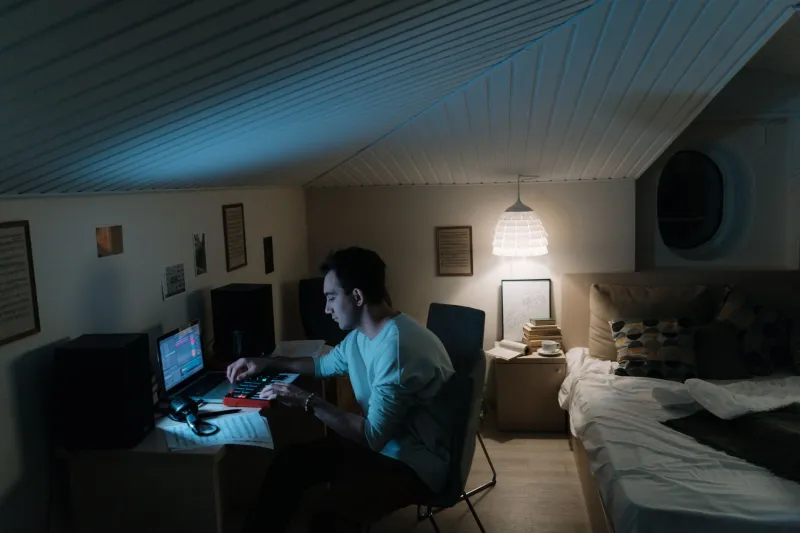
The streaming data on this is genuinely striking. Independent producers working with minimal setups — a laptop, a modest audio interface, maybe a drum machine — are consistently outperforming their industry-funded counterparts on a per-dollar basis. The barrier to entry for creating competitive music has effectively collapsed.
Garageband has produced charting records. FL Studio, which you can get for a couple hundred dollars, has been the engine behind some of the most influential beats of the last ten years. Artists like Lil Yachty, early Playboi Carti, and a dozen others built their initial followings on recordings that major-label engineers would have rejected as demo quality.
The platforms accelerated this. Spotify's algorithm doesn't care how much you spent on your mix. YouTube doesn't reward Dolby Atmos. SoundCloud built its entire identity on the idea that a rough upload from a teenager in Memphis could sit right next to a major-label release and get judged purely on its merit. That democratization changed what "good" sounds like.
What Listeners Are Actually Responding To
Talk to people who are deeply embedded in hip-hop culture — not casual listeners, but the people who follow producers the way others follow athletes — and they'll tell you the same thing in different ways: texture matters.
A beat that has grain to it, that has the imperfections of a sample that wasn't quite cleaned up, that has a kick drum that slightly clips — that beat has character. It has a physical presence that a perfectly mastered, loudness-normalized streaming track often lacks. It sounds like it was made by a human being in a specific moment, not generated to spec.
This is the same reason vinyl has maintained a passionate following despite being objectively inconvenient. It's the same reason people still love old soul records even though the frequency response is technically inferior to modern recordings. The imperfection is the point. It's evidence of process.
Hip-hop listeners, who have always been some of the most critically sophisticated ears in music, pick up on this instantly.
The Backlash to Backlash
Of course, there's a counter-argument, and it deserves space. Some of what gets called "lo-fi authenticity" is just underfunded music dressed up in cultural credibility it hasn't earned. Bad mixing isn't a philosophy. Muddy vocals aren't automatically raw — sometimes they're just hard to understand.
The difference between intentional roughness and lazy execution is real, and experienced listeners can usually tell. The best lo-fi hip-hop productions — think early Grieves, or the grittier corners of Griselda's catalog, or the more recent work coming out of collectives in Detroit and Baltimore — are carefully constructed to sound unconstructed. That's a skill. It takes taste and intention to make something feel effortless and unfinished simultaneously.
The artists who understand this are doing something genuinely sophisticated. The ones who mistake poor craft for aesthetic choice usually don't last.
Where This Goes From Here
Major labels are, predictably, trying to engineer the lo-fi sound rather than understand it. There are now expensive studio techniques designed to replicate the warmth of a bedroom recording — analog saturation plugins, vinyl simulation chains, "vintage" presets that cost more than the original equipment they're imitating. The irony is thick enough to cut.
But the underlying shift is real and probably permanent. The assumption that bigger budgets produce better music has been broken, and hip-hop broke it. The culture has always had a talent for finding authenticity in limitation — from the South Bronx DJs who turned two turntables into an art form to the Atlanta producers who built an entire sonic movement out of Roland drum machines that cost less than a studio session.
Dirty tape energy isn't a trend. It's hip-hop remembering what it's always known: the feeling matters more than the finish. The roughest records in your library are probably the ones you know every word to.
And that's not an accident.