The Feature Tax: How A-List Verse Prices Are Bleeding Hip-Hop Dry
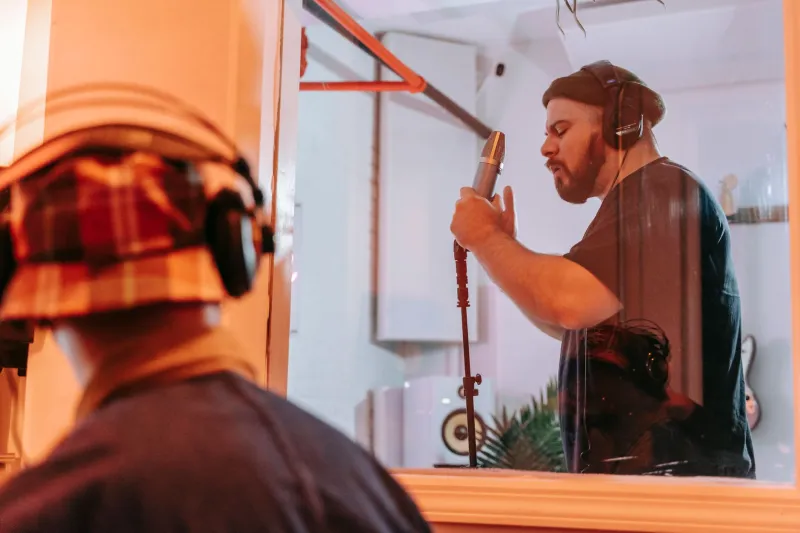
There was a time when a feature meant something personal. A producer slid a beat through the right hands, somebody vibed with it, and magic happened in a booth somewhere between midnight and 3 a.m. Money changed hands, sure, but the currency was often respect, reciprocity, and the unspoken promise that you'd return the favor when it mattered.
That time is largely gone.
Today, booking a verse from a top-tier rapper isn't much different from buying a Super Bowl ad spot. The prices are absurd, the process is bureaucratic, and the whole thing runs through a chain of managers, A&Rs, and middlemen who each take a slice before a single bar gets written. Welcome to the feature economy — and it's pricing a whole generation of artists out of the game.
How We Got Here
The inflation didn't happen overnight. Back in the early 2000s, a feature from a household name might run anywhere from $5,000 to $25,000 depending on who you were talking to and how tight your crew was. Fast-forward twenty years and those numbers look almost quaint. Industry insiders — speaking off the record because, well, this business runs on discretion — put current rates for A-list features anywhere between $100,000 and $500,000 for a single verse. Some names reportedly won't even open an email for less than a quarter million.
Streaming changed the math in ways nobody fully anticipated. When album sales were the primary revenue driver, features were partly promotional — a big name on your record meant more units moved, which benefited everyone. Now that streams generate fractions of a cent per play, artists and their teams look at features as standalone income opportunities. Your verse is a product. Price it accordingly.
The result? Features have become a luxury item in a genre that built its identity on hustle and access.
The Kingmakers Nobody's Talking About
Here's what gets overlooked in conversations about feature costs: it's not always the artist driving the price up. More often than not, it's the ecosystem around them — the managers positioning their clients as exclusive commodities, the entertainment lawyers structuring deals that require sync clearances and creative approval clauses, and increasingly, a new breed of what the industry quietly calls "feature producers."
These are the connectors. The people who have enough relationships on both sides of a deal to broker verses the way a real estate agent brokers properties. They know which artists are actually available, which ones only look available, and crucially, which ones can be reached through the right back channel. They charge for that knowledge — sometimes taking 15 to 20 percent of the feature fee just for making the introduction.
"There's a whole shadow layer to this," says Marcus Webb, a New York-based beatmaker who's been producing professionally for nearly a decade. "You think you're paying the artist, but you're actually paying four or five people just to get to the artist. By the time you factor all that in, you spent your whole budget on eight bars."
Webb knows this from experience. He spent the better part of two years trying to secure a feature for a project he was executive producing, eventually watching the deal collapse after months of back-and-forth because the artist's team added a last-minute creative approval clause that effectively gave them veto power over the entire song.
"I walked away," he says. "Had to. It wasn't worth it."
Underground Artists Are Playing a Different Game
The artists who can't afford the feature tax — which is most independent artists — have been forced to innovate, and honestly, some of what they're building is more interesting than anything happening at the top of the market.
Collective-based collaboration has made a serious comeback. Instead of chasing a single big name, producers and MCs are building dense networks of peers who trade verses the old-fashioned way: for free, for credit, for the culture. Regional scenes from Houston to Detroit to Atlanta's outer suburbs are running on this model, creating ecosystems where the currency is reputation and relationships rather than wire transfers.
Jasmine Okafor, a 24-year-old producer out of Chicago who goes by the handle Prism, has built her entire collaborative strategy around this principle. Her debut project featured twelve artists — none of them household names, all of them hungry — and she coordinated the whole thing without spending a single dollar on verse fees.
"I reached out to people whose work I genuinely loved and told them exactly what I was trying to make," she explains. "Nobody asked me about rates. We just made music. That's how it's supposed to work."
Prism's project landed on several end-of-year lists and generated enough buzz to get her meetings with labels she'd been trying to reach for years. The irony wasn't lost on her. "I couldn't afford the feature that was supposed to open doors," she says. "So I built my own door."
Who's Actually Worth the Price?
Not every A-lister is playing the same game, and it's worth making that distinction. There are artists who command premium prices because their teams have commodified their brand down to the millisecond. And then there are artists who still collaborate the way hip-hop was meant to — based on chemistry, mutual respect, and the potential to make something neither party could make alone.
The difference is usually visible in the music. When a feature is a transaction, it sounds like a transaction. The verse is competent, maybe even technically impressive, but it sits on the track like a paid advertisement. When a feature is a genuine creative exchange, you can hear it — the energy is different, the artists are actually talking to each other through the music.
Producers who've worked at both levels will tell you the same thing: the best verses they've ever gotten came from artists who were excited about the concept, not the check. That doesn't mean those artists work for free — it means they're selective in a different way, choosing projects based on creative alignment rather than market positioning.
The Broader Cost
There's something worth naming directly here. When features become financial barriers, hip-hop's collaborative DNA gets damaged. The genre was built on cross-pollination — West Coast artists on East Coast records, Southern flows meeting Midwest production, underground MCs elevating mainstream projects and vice versa. That mixing is how styles evolve, how new sounds get born, how the culture stays alive.
Price that process out of reach for independent artists and you don't just hurt their individual projects. You slow the whole ecosystem down. You create a two-tier system where the expensive features stay expensive because they're the only ones with visibility, and the artists who can't afford them get stuck in a loop they can't break out of.
The underground isn't waiting for that system to fix itself. It's building around it — through collectives, through creative bartering, through the kind of scrappy ingenuity that made hip-hop what it is in the first place.
The feature tax is real. But so is the resistance to it. And if history is any guide, bet on the people who figured out how to do more with less.