Bars for Hire: The Shadow Economy Keeping Hip-Hop's Biggest Names on Top
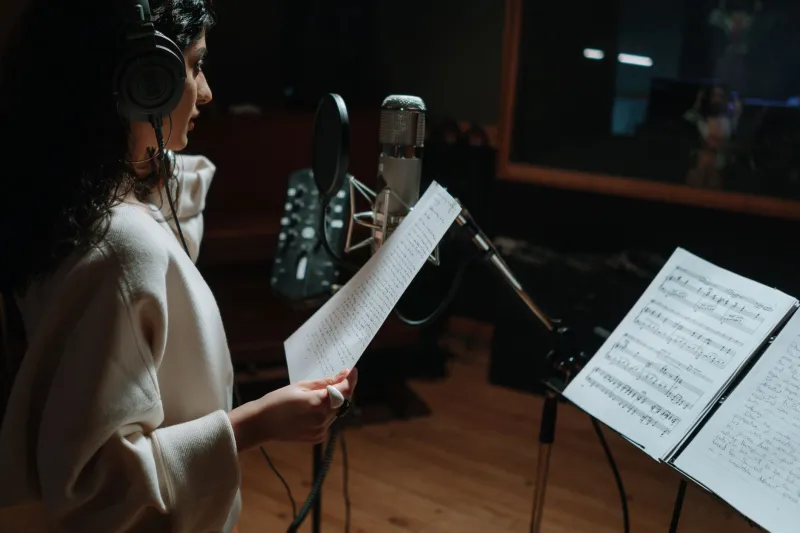
Let's get something straight from jump: ghostwriting is not new. It is not a scandal. It is not even particularly rare. What is new is the conversation around it — louder, messier, and more unavoidable than it has ever been. In an era where a rapper's authenticity is currency, the people writing bars in the background are quietly cashing checks while the credited artist cashes the clout. Welcome to hip-hop's most open secret.
The Business Nobody Talks About (But Everybody Knows)
The ghostwriting economy in rap operates like a well-run underground market. There are rates, there are relationships, and there are rules — the biggest one being: you do not talk about it. Writers who move in these circles describe a tiered system where newer artists might pay a few hundred dollars for a hook, while established names with reputations to protect can spend tens of thousands on a full project's worth of lyrics.
"It's a service industry at the end of the day," says one Los Angeles-based writer who has contributed to multiple top-40 rap records and asked to remain anonymous. "People need a product, I provide it. The same way a ghostwriter works for a CEO's memoir, I work for artists who have the brand but need the words."
That comparison to corporate ghostwriting is one you hear a lot in these conversations — and it is not wrong. Book publishing has normalized the practice for decades. The difference is that hip-hop built its entire cultural identity around the idea that the person holding the mic is the one bleeding onto the page. Authenticity is not just a value in rap; it is practically the product itself.
How the Credits Game Actually Works
Here is where it gets complicated. Not every behind-the-scenes writing contribution is technically ghostwriting. Songwriting credits in rap exist on a spectrum. A producer who builds a beat that directly interpolates an older melody gets a writing credit. A collaborator who helps restructure a verse in the studio might get a "co-writer" tag on the backend without ever being publicly acknowledged. And then there are the true ghosts — people who write entire verses, hooks, or albums and walk away with a check and a confidentiality agreement.
The money flows through a few different channels. Sometimes it is a direct cash payment, no paper trail. Other times it is a split of the publishing rights, meaning the ghostwriter earns royalties every time the song generates revenue — they just never get their name in the liner notes or on a press release. For some writers, that backend publishing money is the whole point. For others, especially younger writers trying to build a reputation, the invisibility is the cost of entry.
"You take the deal because you need the placement," explains a Nashville-based songwriter who crossed over into hip-hop and R&B after years in country music. "You hope it leads to something where you can eventually put your name on it. Sometimes it does. A lot of times it doesn't."
Social Media Changed the Math
For a long time, the code of silence held because breaking it cost more than keeping it. Now? The math is shifting. Social media has given ghostwriters a platform they never had before. Twitter beef, Instagram exposés, and TikTok confessionals have turned what used to be industry whispers into public record. The Drake and Meek Mill confrontation back in 2015 might have been the cultural tipping point — Meek's accusations about Quentin Miller writing for Drake cracked the dam open in a way the industry had not anticipated.
Since then, writers have grown increasingly vocal. Some have built their own audiences by being transparent about their contributions. A few have even leveraged their behind-the-scenes reputation into their own artist careers, using the credibility of "I wrote that" as a launching pad. The anonymity that was once mandatory is starting to feel optional — and for some, it feels like a bad deal.
"Why am I protecting someone else's legacy?" asks one writer who recently went public about contributions to several well-known projects. "I'm not bitter about it, but I'm also not going to pretend I didn't do the work. The culture respects craft. I want that respect too."
The Artist's Perspective (And Why It's More Complicated Than You Think)
It would be easy to frame this as a simple story of exploitation — talented writers being silenced so famous artists can maintain a false image. But the reality is more layered. Many artists who use ghostwriters are themselves deeply involved in the creative process. They might develop the concept, shape the narrative, direct the emotional tone, and perform the material in a way that makes it distinctly theirs. The writing is one part of a larger creative act.
There is also the reality of the music industry's pace. When labels are demanding albums on tight timelines and artists are simultaneously managing tours, brand deals, social media, and their personal lives, the idea that every bar must be self-generated starts to feel like an unrealistic standard that no other genre holds itself to. Pop music has writing rooms. Country has co-writing sessions built into its culture. Hip-hop just has a bigger problem with admitting it.
"The standard is applied unevenly and everybody knows it," says a New York-based music attorney who works with both artists and writers. "If a rock band has five songwriters credited on a track, nobody questions who the 'real' artist is. In rap, the expectation of sole authorship is baked in, and that creates this whole shadow economy."
Where Transparency Goes From Here
The conversation around credits in hip-hop is not going away — it is accelerating. Streaming platforms have made publishing data more accessible than ever. Organizations like the Recording Academy have pushed for more rigorous credit disclosure. And a new generation of artists, many of whom came up in the social media era, seem less attached to the mythology of the lone genius rapper.
Some labels are quietly updating their contracts to include more formal co-writing acknowledgments, even when those credits stay off the public-facing release. Others are starting to see the value in transparency as a marketing angle — crediting a well-known writer can actually add cachet rather than subtract it.
For the ghostwriters themselves, the future looks like a slow but real reckoning. The ones who have been doing this for years are watching a younger cohort demand more — more credit, more visibility, more acknowledgment that the bars behind the bars matter.
Hip-hop was built on the truth. It has always been the genre that said what other music was afraid to say. The irony is that for decades, one of its biggest truths has been the one it keeps most carefully hidden. That might finally be changing — one leaked DM, one public credit, one honest conversation at a time.
The ghosts are starting to want their names back. And honestly? They've earned the right to ask.