The Real Incubators: How Underground Rap Collectives Are Building Hip-Hop's Next Wave From the Ground Up
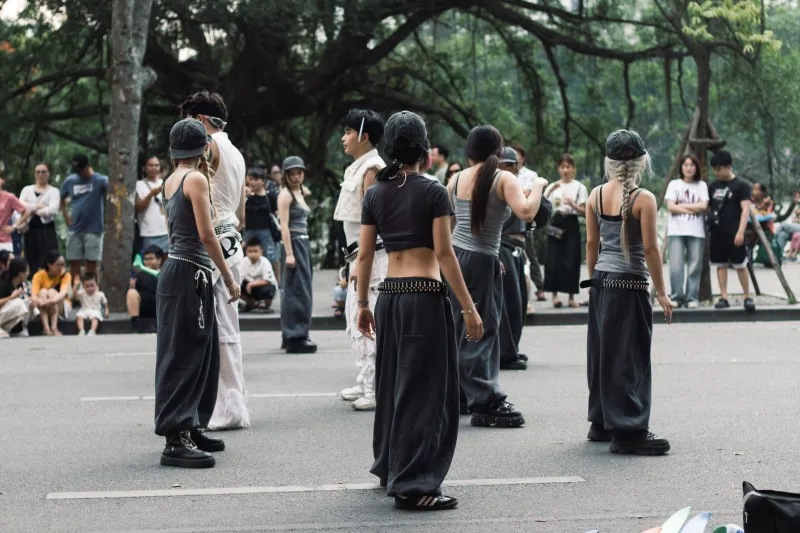
In a warehouse in East Atlanta, a collective of about fifteen rappers, producers, and visual artists have been meeting every other Sunday for three years. There's no formal membership. There's no manager. Nobody's getting paid to be there. What there is: a shared commitment to pushing each other, a rotating cipher that has produced three independently released projects in the last eighteen months, and a growing regional reputation that's starting to attract attention from people with checkbooks.
They don't have a record deal. They don't want one — yet. And that "yet" is doing a lot of work.
This is the story of how hip-hop's real talent development is happening right now, and why the institutions that are supposed to be finding the next generation are almost always the last to know about it.
The Label System Was Never Built for This
Let's be honest about what major labels are good at. Distribution at scale. Marketing infrastructure. Negotiating sync deals. The machinery of turning an existing artist into a commercial product. What they've never been great at — and what they've arguably gotten worse at in the streaming era — is genuine artist development. The long, patient, expensive work of helping someone figure out who they are creatively before they're in front of an audience.
Development deals still exist, technically. But the economics have shifted so far toward short-term ROI that most labels are signing artists who are already developed, already have an audience, already know what they're doing. They're acquiring momentum, not building it.
Into that vacuum, collectives have stepped. And they've been doing it better than any corporate structure could, because the thing that makes a collective work — genuine peer investment in shared success — can't be manufactured with a contract.
What a Real Collective Actually Does
The word gets thrown around loosely, so let's be specific. The collectives doing meaningful work in hip-hop right now aren't just groups of friends who rap together. They're functioning creative ecosystems with internal economies, shared aesthetic philosophies, and deliberate processes for developing individual voices within a group identity.
Take the model that's been working in Chicago's underground for years — crews where producers, rappers, engineers, graphic designers, and photographers operate as a unit. When one person gets a placement, the money circulates. When someone records, the whole crew is in the session, pushing back, offering takes, catching weaknesses before the world does. The feedback loop is constant and honest in a way that label relationships almost never are, because nobody in the crew has a financial incentive to tell you your mediocre verse is hard.
In Los Angeles, several Leimert Park-adjacent collectives have been running formal skill-sharing structures — essentially workshops where members teach each other. A producer who knows music theory teaches harmony. A rapper with a journalism background teaches lyrical research and sourcing. An engineer explains signal chains. The result is artists who are more complete, more versatile, and more difficult to categorize — which is exactly what the algorithm hates and what audiences love.
The Cypher as Technology
The cipher — or cypher, depending on your spelling allegiance — is one of hip-hop's most underrated institutions. It looks like a freestyle circle. It functions like a pressure cooker for talent.
In a real cipher, you can't hide. You can't lean on your best verse. You can't rely on production to carry you. It's just you, the beat, and the expectation that you'll bring something. That environment produces a specific kind of artist — quick, adaptable, unafraid of failure, because failure in a cipher is just the next person's turn.
Collectives that center the cipher as a regular practice are producing rappers with a particular quality: they can perform anywhere, in any context, for any audience, and make it work. That's not a skill that gets developed in a recording studio. It doesn't show up on a polished EP. But it's the skill that separates artists with longevity from those who flame out after one viral moment.
Cities like Houston, Detroit, and Philadelphia have maintained cipher cultures with enough consistency that you can trace direct lineages — you can watch how an idea or a flow pattern moves from one generation to the next through these informal gatherings in ways that have nothing to do with radio play or streaming algorithms.
The Mainstream Discovers It Last
Here's the pattern that repeats so reliably it's almost boring to describe: a collective builds something real over several years, operating entirely outside mainstream visibility. A few tastemakers — bloggers, other artists, DJs — start paying attention. The collective's work gets a profile on a respected music site. Labels send scouts. Someone gets signed. The collective gets credited as a launching pad, briefly, and then the industry moves on.
What gets lost in that story is everything that happened before the scout showed up. The years of Sunday ciphers. The self-released projects that didn't break through but taught everyone involved something essential. The internal arguments about artistic direction that forged a shared aesthetic. The failures that nobody outside the group ever saw.
That's the real work. And it happens entirely without institutional support, often in spite of institutional indifference.
The collectives that sustain themselves — that keep producing meaningful work even after individual members get major-label attention — are the ones that understand this. They're not a pipeline for the industry. They're an alternative to it. The deals are a side effect of the culture they've built, not the goal.
What the Industry Could Learn (But Won't)
There's a version of this story where major labels look at what collectives are doing and try to replicate the model. Some have tried — development programs with cohort structures, creative residencies, curated artist communities. The results have been mixed at best, because you cannot manufacture the conditions that make a genuine collective work.
The trust, the shared stakes, the honest feedback, the long timeline — none of that fits inside a quarterly earnings report. Collectives work because they're not optimized for anything except the music and the culture. The moment you introduce external financial pressure, the chemistry changes.
What labels could do — and what a few smarter operators are starting to do — is learn to identify collectives earlier and support them without extracting from them. Fund the warehouse space. Don't demand ownership of what's created there. Let the collective develop on its own terms and be patient about when individual deals make sense.
That requires a long view that most of the industry doesn't currently have. But the collectives don't need the industry to have it. They're building regardless.
The Future Is Already Happening
The next wave of hip-hop is already in a room somewhere. It's in a basement in Detroit, a community center in Houston's Third Ward, a park in Bed-Stuy that's been running ciphers since before the neighborhood changed. It's being built by people who aren't waiting for permission or validation from institutions that have historically been slow to recognize what's right in front of them.
This is how hip-hop has always worked. The culture incubates underground, develops its own standards and aesthetics, and eventually surfaces into mainstream visibility — usually already fully formed, already with a committed audience, already past needing what the industry is offering.
The collectives are the keepers of that process. They're not a trend. They're the mechanism. And right now, they're doing some of the most important work in American music.
You just have to know where to look.